Courses
Introductory Courses
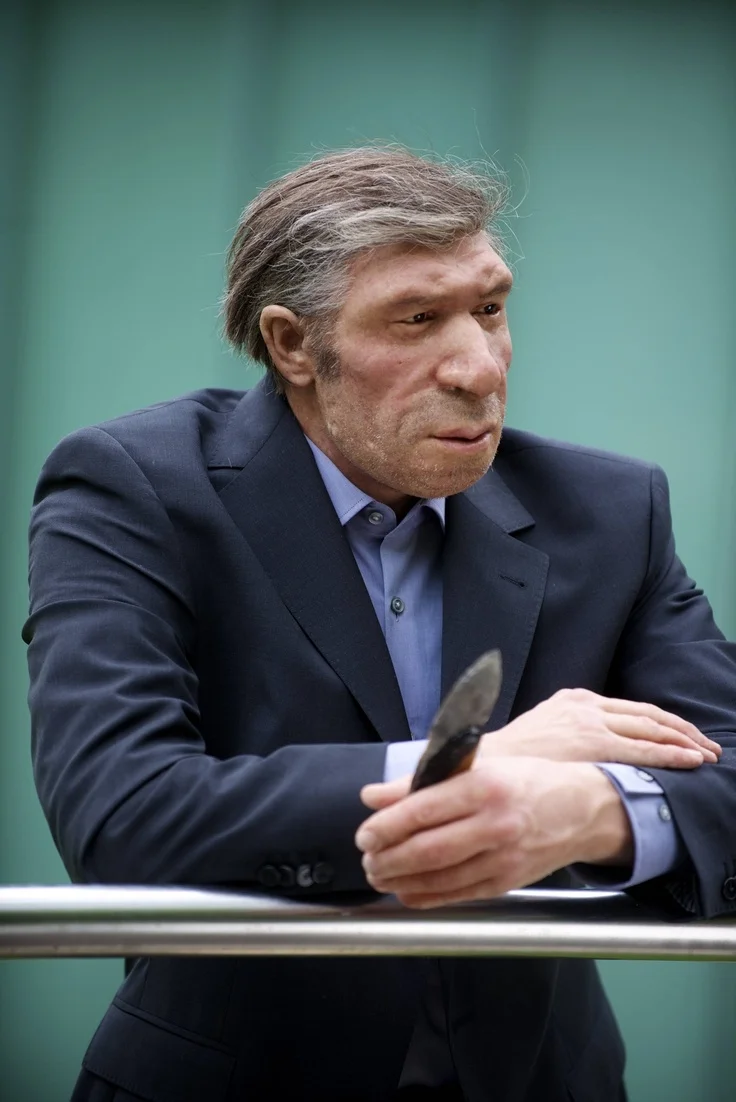
Origins of Human Societies
Origin stories don’t just tell us about our pasts: they define our present and shape our future.
This course examines the science of human evolution through an anthropological lens. We explore the material building blocks of this narrative – the fossils, artifacts, genetic sequences, ethnographic analogies – and trace the ways they’ve been arranged to explain the world in which we live. Our survey will cover a span of two million years, highlighting moments in this trajectory that are considered critical revolutions in our species’ development. Chief among these are the emergence of anatomically-modern humans; the development of language, creativity, and symbolic expression; and the origins of agriculture and domestication. As we evaluate arguments surrounding each of these revolutions, we will also think critically about why so many versions of this origin story feature the same three plot twists. Why are these three points so central to the telling of this story when humans and human societies have undergone so many other important transformations? What can this origin story tell us about the storytellers themselves?
This is an exploration of science, perception, and the history of anthropology and archaeology. Despite the seemingly neutral language of science, we will be wading through highly political waters. Ultimately our path through the semester will show us as much about our evolutionary past as it reveals about our contemporary world.
Intermediate Courses

How China Became Chinese
As a modern nation, China is proud of its deep cultural roots, often citing its ‘5,000 years of continuous history’ as a point of pride in a world of much younger nation-states. Why 5,000 years of history? Why was 3,000 BC the ‘beginning’ of China? What happened before then? What made China…Chinese?
This course introduces students to the ancient Chinese world before it was the Middle Kingdom. We will draw on archaeological evidence from the Upper Paleolithic to the Han period to give voice to a complex social, political, and economic past that was not recorded by dynastic historians. We will focus on regional patterns of social change to highlight the diverse ways that innovations like the cultivation of plants and animals, centralized political power, and bronze metallurgy took shape and impacted local practices. Finally, we will turn our attention to the present to examine how the study of Chinese prehistory has contributed to modern notions of a uniquely 'Chinese' culture – and how the notion of Chineseness has evolved through time.
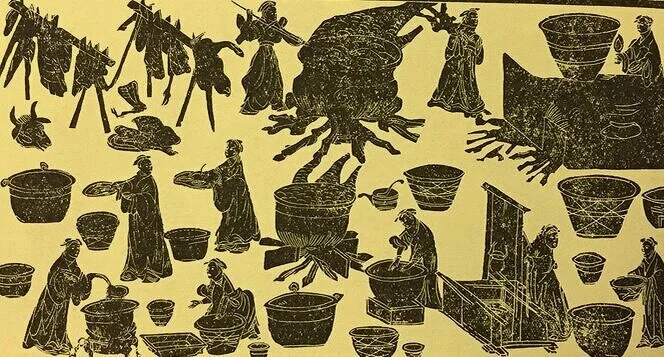
The Ancient Table: Archaeology of Cooking and Cuisine
Humans don’t just eat to live. The ways we prepare, eat, and share our food is a complex reflection of our histories, environments, and ideologies. Whether we prefer coffee or tea, steamed rice or millet noodles, cornbread or challah, chicken breast or chicken feet, our tastes are expressive of social ties and social boundaries, and are linked to ideas of family and of foreignness.
How did eating become such a profoundly cultural experience? This seminar takes an archaeological approach to two essential questions concerning food and society: First, why do we eat what we eat? And, more interestingly, how do we decide what is and isn’t edible? Second, how do social beliefs and institutions impact how obtain, prepare, eat, and toss our food? And how in turn does food impact social beliefs and institutions? Throughout the semester we will explore a board range of culinary practices from imperial China to medieval Baghdad to historic California, as we investigate how food is used to ascribe identities and social roles, thwart power, build nations, and rewrite history. Along the way, our discussions will draw us into broader anthropological conversations concerning health and wellness, the nature/culture divide, and the question of cultural authenticity.
Advanced Courses

Gender Archaeolxgy
This seminar critically reexamines the ancient world from the perspective of gender archaeology. Though the seedlings of gender archaeology were first sown by of feminist archaeologists during the 70’s and 80’s, this approach involves far more than simply ‘womanizing’ androcentric narratives of past. Rather, gender archaeology criticizes interpretations of the past that transplant contemporary social roles onto the archaeological past, casting the divisions and inequalities of today as both timeless and natural.
The aim of this course is to investigate how cultural categories like gender, sexuality, class, ethnicity, and race operated in a particular time and place, and to ask how one became a social being – a person – in the past.
This class challenges the idea of a singular past, instead championing a turn towards multiple, rich, messy, intersectional pasts. The ‘x’ in ‘archaeolxgy’ is an explicit signal of our focus on this diversity of pasts and a call for a more inclusive field of practice today.